The perimeter of a rink is both a playing boundary and a working edge. It contains the ice, supports the way the sport is played and sets the line between the sheet and surrounding circulation areas. Above the boards, protective glass or other panels support visibility and separation. Overhead, lighting must make the playing surface and its surroundings legible to participants, officials, staff and spectators.
These elements belong to one operating environment. A gate that does not close properly can affect access control; a damaged panel can become a safety concern; a poorly lit area can make inspection difficult. Their engineering, materials and installation must meet the relevant facility design and safety requirements. General observations on this page are not a substitute for inspection by a competent person or the applicable standards for a specific venue.
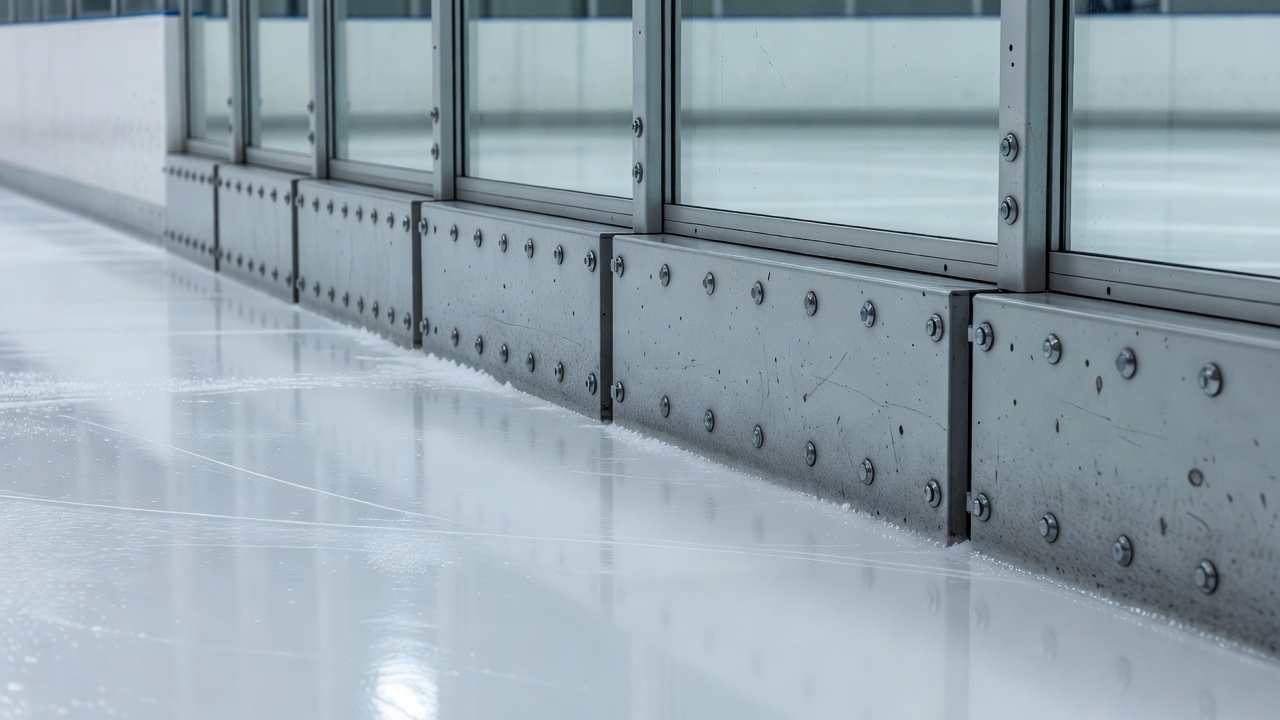
A routine visual check can flag a change; assessment and repair should follow approved site procedures.
Boards as an engineered assembly
Rink boards are not merely a row of panels. The assembly may include a structural framework, facing, kick plate, dasher boards, fasteners, gates and interfaces with the slab or surrounding floor. Each connection has a role, and the arrangement varies by facility. Repeated impacts, cleaning chemicals, movement, age and repairs can affect condition over time. A maintenance plan should identify components, inspection intervals and who is authorised to make a repair.
Look for changes that are visible and recordable: loose or missing fasteners, cracked or deformed panels, sharp edges, damaged padding, gaps, corrosion, water ingress or gate movement that differs from normal. A visual observation is not a structural assessment. If a component seems unstable or damaged, keep people away as required by the venue’s safety procedure and report it promptly. Staff should not improvise repairs to parts that protect users or carry impact loads.
Glass, panels and gates
Protective panels need to remain secure, clear enough for their intended use and free of damage that could compromise safe operation. Cleaning routines should use products and methods suitable for the material, seals and fittings. A check after cleaning can reveal movement, loose connections or marks that were previously difficult to see. If the rink uses different panel types or shielding arrangements, make sure staff understand which product and procedure applies in each location.
Gates and access points deserve their own checks. A gate should operate as designed, latch reliably and remain clear of obstruction. Hinges, handles, seals and closers can wear or become misaligned. Keep a record of recurring faults and follow the site’s isolation or access-control process when a gate cannot be secured as intended. The schedule may need to account for user groups, events and maintenance access around the rink.
Lighting is part of operations
Lighting affects visibility for play, work and inspection. Uniformity matters alongside overall brightness: abrupt dark areas, glare or reflections can make details harder to interpret. The required performance depends on the activity, venue, camera or broadcast needs and local rules. A lighting design should be assessed by competent professionals using the applicable project criteria; a photograph or visual impression cannot confirm compliance.
Operators can still maintain a useful record. Note failed lamps or fixtures, unusual flicker, unexpected dark patches, glare complaints and when those conditions occur. Compare observations by area and time, and record whether a lighting control scene or event setup changed. Safe access for inspection and replacement is essential, especially for high-mounted equipment. Electrical work belongs to authorised personnel following the required isolation and working-at-height controls.
Moisture, reflections and enclosure edges
The rink environment can include cold surfaces, warm air, moisture, cleaning activity and changing occupancy. Condensation on panels or around doors may affect visibility and can suggest that building conditions need attention, but the cause is not self-evident. Record where moisture occurs, the time, recent operational changes and any relevant conditions. Address drainage, ventilation and building-system questions through the people responsible for those systems.
Edges are also where equipment and people move between zones. Keep walkways, gate swings, emergency routes and service access clear. Store hoses and tools so they do not create trip hazards or obstruct escape paths. During ice work, communicate when vehicles or machinery will enter or leave the sheet. Simple coordination reduces the chance that a maintenance task conflicts with public access or a scheduled session.
Join inspection to planned work
A good enclosure log identifies the location, component, observation, date, action taken and follow-up owner. Photographs can help track a change when made under safe conditions and in line with site rules. Set responsibility for routine visual checks, periodic specialist inspections and repair approvals. When a repair affects the playing boundary or protective system, record what was replaced and confirm that the assembly is returned to service through the facility’s process.
Boards define the rink’s edge, but the operating system extends beyond them. Lighting, circulation, moisture control, access and maintenance all meet at that boundary. Treat each as part of the same ledger: observe carefully, record consistently and refer design or safety decisions to the qualified people responsible for the venue.