The marks left by skating are the starting condition for the next sheet. A resurfacer gathers loose snow, shaves a thin layer where required, collects the cuttings and applies water to replenish the surface. The resulting film freezes before the next use. The aim is a consistent, usable sheet, while the exact method depends on the machine, ice condition, schedule and facility procedures.
Resurfacing machines vary by size, energy source, controls and water systems. Their working parts can include a blade assembly, conditioner, snow collection system, water tank, wash water and a towel or finishing arrangement. Operators should learn the machine’s manual and training materials, since controls and safe procedures differ. No universal blade position or water quantity can be prescribed for every rink.
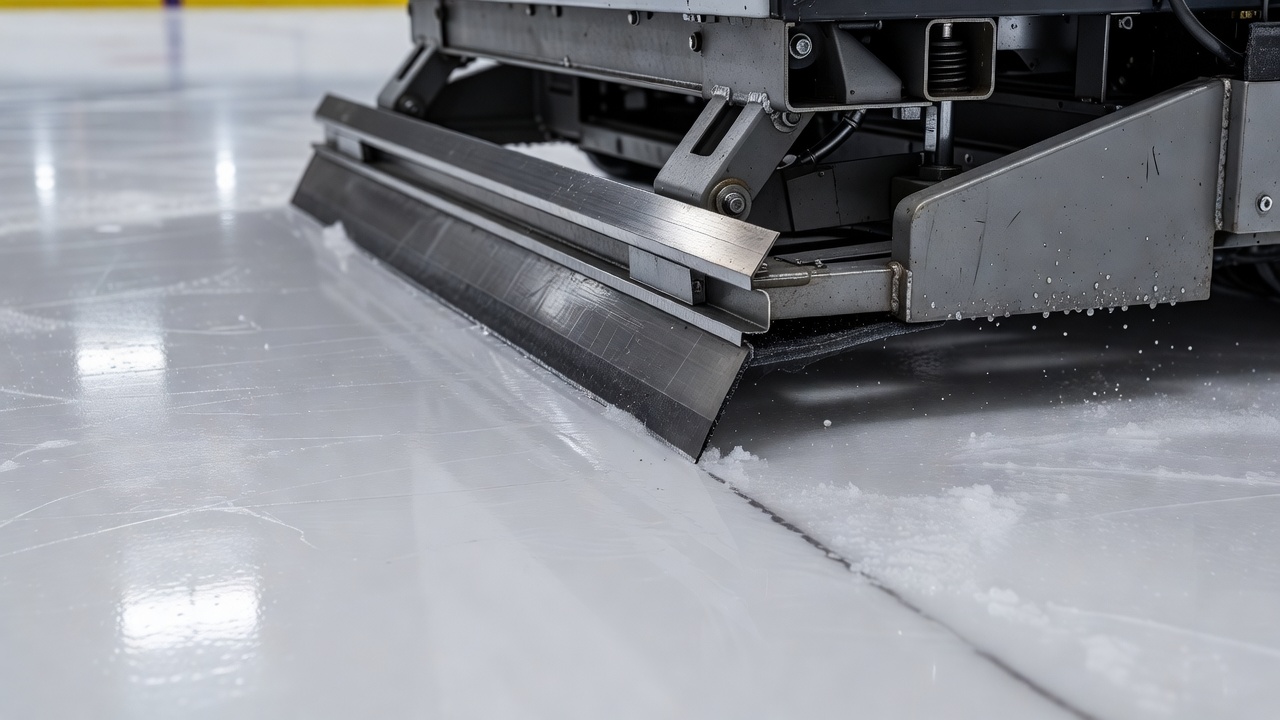
Machine configuration and operating instructions vary; use the manufacturer’s guidance for the specific resurfacer.
The resurfacing sequence
Inspect and prepare
Confirm the scheduled area is clear, review the surface and machine condition, and follow the local pre-use inspection and safety checklist.
Gather snow and condition the ice
Operate the cutting and collection equipment as trained. The blade removes a controlled layer, while the conditioner helps distribute the resurfaced material across the route.
Apply water consistently
Water replaces the surface removed by the pass. Temperature, cleanliness, flow and application depend on equipment and local practice; follow the approved operating method.
Allow the sheet to freeze
Keep the area closed until the surface has set to the site’s operating standard. Record completion and communicate any unusual condition to the next shift.
Blade condition and surface clues
A blade is a wear component. Its edge, alignment and setup influence the quality of the cut, but adjusting it without proper training can create hazards or damage the ice. Operators should inspect and change blades according to the manufacturer’s procedure and site risk controls. Safe isolation, suitable tools and correct lifting or handling arrangements matter as much as the finish itself.
Repeated grooves, chatter marks, uneven snow collection or a rough finish can be worth recording. They do not by themselves prove that the blade is the cause. Surface temperature, ice hardness, machine speed, route overlap, blade condition and mechanical settings may interact. Record the location and conditions, compare the result with earlier passes, and ask a qualified person to inspect the machine when the pattern persists.
Water, snow and timing
Snow removed from the sheet carries heat and contaminants. The snow tank and disposal routine should be managed under facility procedures, with attention to capacity, safe access and drainage. Wash water, where fitted, helps remove debris from the surface before the final application. The quality of water and the operating method can influence the finish, so a consistent process is more useful than an improvised change from shift to shift.
Timing also shapes the result. A surface needs time to freeze; a fast return to play can leave marks or soft areas. A busy timetable may limit the available window, so operators and schedulers benefit from a shared plan that allows the machine pass, checks and freeze time. Building conditions and the cooling system influence how quickly the fresh layer sets, so local experience and measured observations should guide scheduling.
Keep the pass repeatable
Good routines make the work easier to compare. Keep a record of the machine used, start and finish times, blade or service notes, water setup, unusual surface observations and any delay before reopening. A simple route plan helps avoid missed strips and unnecessary overlap. Handover notes should separate what was seen from what is suspected, so the next operator can confirm rather than inherit an assumption.
Maintenance follows the manufacturer’s schedule and the facility’s inspection plan. Check tyres, moving parts, controls, water systems, wash systems and safety equipment only within authorised tasks. Escalate leaks, unusual noises, control faults or damage; do not operate equipment that fails required checks. Regular service protects the machine and supports predictable ice work.
Make each shift safer and clearer
Before a pass, control access to the work area and follow the site’s rules for doors, gates and pedestrian movement. During operation, use the machine as trained and keep a clear view of the route. Afterward, secure the machine, manage waste and water according to procedure, and note anything that needs attention. This is especially important when several operators share the same equipment.
A resurfacer cannot compensate for every issue elsewhere in the rink. It can, however, provide a repeatable reset when the surface, machine and conditions are understood. Observe the finish, document the process, allow adequate freeze time and investigate recurring changes through the appropriate site channels.